
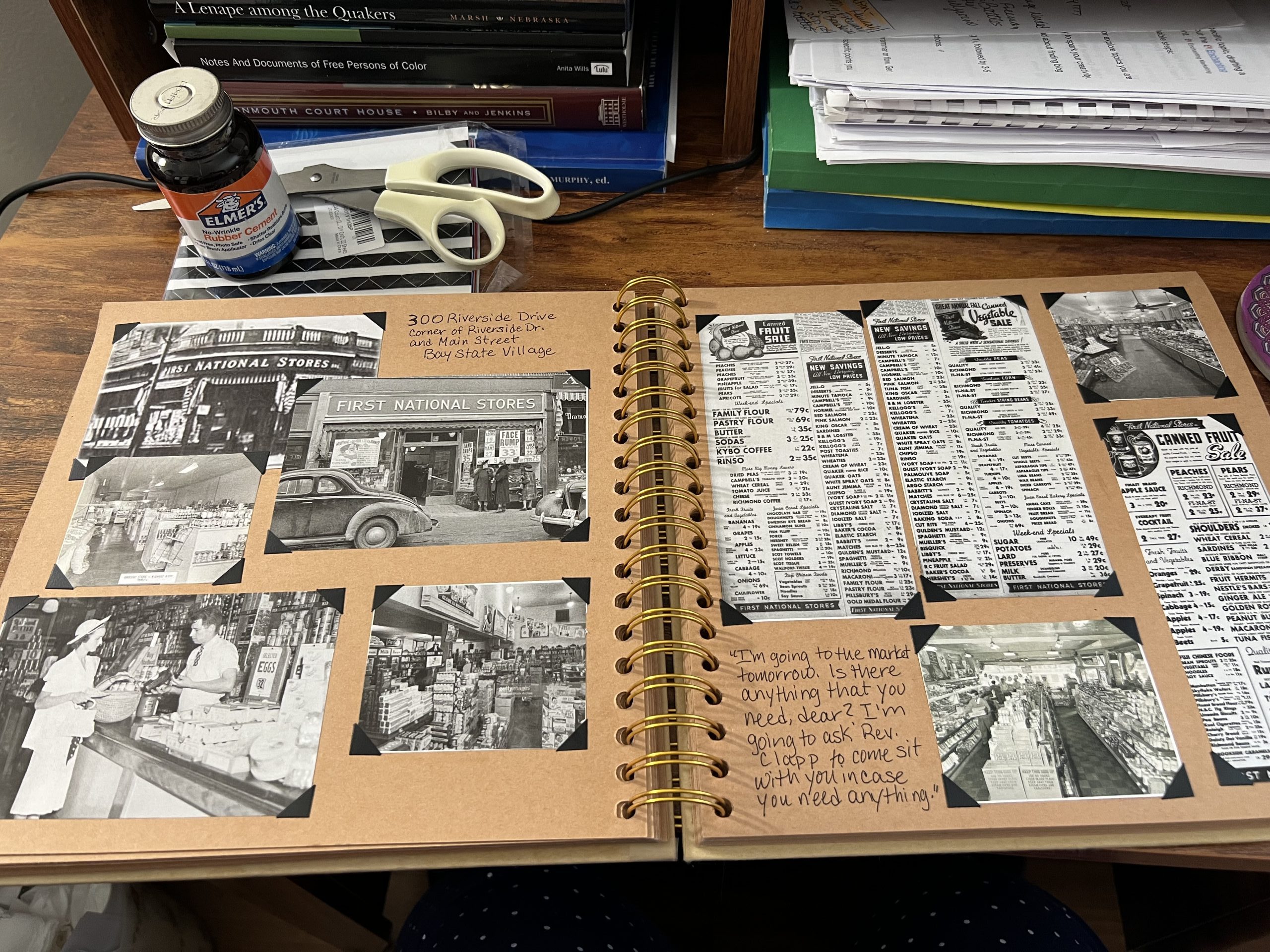
The Golden Thread: Why this scene didn’t make the cut
Every book has a hidden heartbeat, but as an author, you don’t always hear it clearly until you are deep in the trenches of a manuscript. For a long time, I thought my novel needed to start in the 1930s with my main character as an older woman, reflecting on her life through a series of time jumps. I spent ten months drafting scenes for that era, attempting to anchor her journey in her later years. But as the story unfolded, I hit a wall. I realized that by jumping back and forth, I was distancing myself from the rawest parts of her journey. To truly capture her interiority and character growth, I needed to stay rooted right there in the past with her, living the moments chronologically as they happened. By opening up about this “lost” scene, I hope to offer a transparent look at the historical fiction writing process. Sometimes, the hardest cuts lead to the best stories.
Finding the True Theme
Initially, I thought the theme was about transformative grief. I was wrong. As the aging main character was about to lose her second husband, I realized that to reach the crucial plot points my characters deserved, I had to change course. Pushing through the 1930s diluted the true theme of this book. It wasn’t until I did some real soul-searching that the true message became apparent: the real theme was the golden thread of strong women surviving, adapting, and passing the torch over generations of time. To honor that thread, this specific piece of the story had to be left behind.
Because I am currently deep under a strict publisher deadline to complete the first draft of an upcoming collaborative history book, I wanted to take a breather and share this “lost” piece of history with you. It is a raw, unedited glimpse into a generation that lived vividly in my mind, even if they couldn’t make it to the final printed pages of my novel.
A Glimpse into 1930s Bay State
It had been a long while since Kate had last gone on a walk to the store. Usually, she would stay at home with Adolph and her sister, Mary, would do the shopping. But for Kate, this was not a chore, but a privilege. A chance for a day of freedom. Free from the constant care of her aging husband. Free from the months of social isolation. Free to just set her mind at ease and be herself.
A gray-blue sky threatened rain, and the freshness of the air made her pause on the stoop to breathe in the fragrance of the flower garden and her freshly hoed vegetable patch. Crossing the expanse of the yard, the grass tickled her ankles and crackled under her feet. Brown patches and sandy soil edged the lawn. At the end of the woven wire fence that secured the garden from animals and protected Kaiser from the traffic heading toward the factories along the Mill River, Kate unlatched the gate, and as she turned to fasten it, she looked across the hedgerow to the Clapp’s house. From where she stood on Riverside Drive, the two houses looked nearly identical. They had the same slate blue paint–perhaps a shade darker on the minister’s house—two gable windows upstairs, two double hung windows downstairs and the front door to the right. It had the bland, utilitarian look of symmetry without adornment of any sort.
Kate had never crossed the hedgerow that ran between the houses. There was no gate to the other side, and she wondered, you suppose hedgerows are the same as mending walls, that they make for good neighbors? Seems like all they do is keep us apart, Kate sulked. I wonder why Vera Clapp and I have never gotten together for coffee.
Vera was a music teacher, led the choirs at West Farms Chapel, and served as the clerk of the parish in addition to caring for her husband and home. The grief and busyness of life often got in the way of living, and just then Kate thought, Maybe I should have reached out to Vera instead of waiting for her to visit me. After all, it had been easy to talk to Ellery about staying with Adolph. But when Vera answered the phone, why didn’t I ask how she was? Maybe there’s something going on I don’t know about. What if she’s more like me than different? No. No, I can’t think about that. Why doesn’t someone just rescue me from this hopeless situation?
Stepping carefully down the concrete steps along a small embankment to the road, Kate turned left onto Riverside Drive. Across the street the firemen at Engine Company No. 4 were washing the hook and ladder truck. Parked beside it was the pumper truck and two rescue trucks. Northampton Cutlery Company owned the fire station, the equipment, and employed the firefighters. So many times, New England factories had experienced fires that closed their doors forever. The Cutlery was prepared for such an emergency.
As Kate walked by, one of the men looked up and waved, “Good morning to you, Ma’am!”
“Hello! Good morning to you!”
To the north of Kate’s house, a dam across the river diverted a canal into the rear of the Cutlery buildings and had powered the machines long before Northampton Electric Lighting had connected the homes and businesses to the power lines. Kate was seven years old when her family moved from Buckland, when her mother was expecting Mary. Her father had been working for Lamson & Goodnow in Shelburne Falls, and a few years later Mr. Clement, who was one of the foremen at Lamson, organized Northampton Cutlery Company, and her father moved his family to Bay State.
The river cradled the village and River Road—as it was called then—hedged off the homes from the factories and carried traffic between Bay State and Paper Mill Village. But since Kate’s girlhood days, the paper and silk mills had closed. Bay State, however, remained a factory village, and just beyond the fire station sprawled the Cutlery buildings—the place where her father had worked as a forger and her brothers had done various jobs. Even Mary had worked there for a short time. A series of two- and three-story red brick buildings connected by perpendicular wings enclosed a rectangular courtyard. Studebakers, Packards and Fords lined the parking lot. It was quiet as she passed the offices, but further down the road Kate heard the pounding of the forgers presses and the shrill whine of stainless steel on the grinding wheels, shaping the blades.
Across the street from the factory, tucked in behind the trees on the corner of Riverside and Lexington, stood a long, two-story brick apartment building with rows of white-framed colonial grid windows known as The Block which housed Cutlery workers. Kate had grown up on Lexington Avenue—which in those days was known as High Street—in a house that sat at the head of a row of wood-framed Cutlery houses, just as nice as any other home on the street. But as a child, The Block had frightened her. While there may have been some families crammed into those rooms, fathers often warned their children to stay clear of that place since mostly single men stayed there.
The Cutlery provided well for their employees and strove to build a community where immigrants and their families were welcomed. Many German and Irish cutlers settled in the area, and further down the road their children attended Bay State Village School, which taught them from first grade to eighth. Many of the children went on to work in the Cutlery, and a few moved on to Northampton High School and then to college. But for the immigrant families, most of them remained craftsmen, or their daughters married them.
As Riverside Drive curved around the perimeter of the villager’s homes, Kate stopped along the grassy side of the road and gazed off to the right at the entrance of Ladd Avenue. Six Clement houses lined the road across from the First National Store. When Kate was young it had been Maynard’s Store and Post Office. The children loved to go there to buy penny candy or a Sunday newspaper with the funnies, and sometimes they’d pick up the mail for their mothers; but, when The First National Stores grocery chain moved into the area, the Bay State Village Post Office closed. And if Kate had to ship a package, she would take the twenty-five-minute walk to the post office on either Elm Street in Northampton or North Main in Florence—an inconvenience that Kate didn’t mind because it allowed her to get out of the house, smell the fresh air, and let her imagination wander.
Now the decision was if she should just go to the store and then home again, or if she might take a detour. Hadn’t Adolph said just last night that Kate needed to get out of the house more and spend some time with the women she had missed so much? And hadn’t he suggested that she pay a visit to Edward’s niece Susie Nuttelman who lived beyond the bend on Clement Street?
The Cutlery building with the tall smokestack extended down the first part of Ladd Avenue, and just beyond it she could see the pretty, white gothic cottage where Mr. Maslow Ladd had lived when Kate was a girl. She didn’t know many people in this part of the village anymore. The cottage had nine gables and sat back from the road with a neatly groomed yard trimmed with a white country fence. Unlike many of the other houses in the area, this cottage, which was larger than her house, had charming shrubs planted along the foot of the front porch. And from there she could see the outline of Clement Manufacturing Company on the horizon. If she took the turn onto Clement Street, she could be at Susie’s house in no time, and since it was Saturday, she knew her niece would not likely be working at the brush factory. She was an inspector there and only worked weekdays, because she was raising Martha’s girl, and it was easier for her to get a sitter that way.
Kate decided that her desire to talk with another woman was greater than her need to restock kitchen cupboards. If she didn’t stay too long, she’d be able to do both and still get home before it got too late in the day. A stand of tall trees separated the small, wood-framed Clement houses from a field that ran the length of the road to the factory parking lot. The cool summer breeze rippled through the tops of the hay field making it look like waves above dry ground. Kate sneezed and retrieved a lace-trimmed handkerchief from her pocketbook. Hay fever was a constant annoyance this time of year. She crossed over to the other side of the street. Now she could see the cupola tower atop the south side of the factory, and the outline of the pretty arched windows.
As she turned the corner down Clement Street, the atmosphere changed from bright, open spaces to the illusion of a narrowing country road. Trees and bushes encroached along the left side of the street, and by the time Kate passed the Ladd cottage, the trees pressed in on both sides. Crickets chirped. Without a warning, Kate stopped short as a chipmunk darted across the road right before her feet. A blue jay darted from a nesting spot making a terrible racket as a tree swallow chased it away, and from a dead limb at the top of the stand, a flock of swallows lifted off into the air as one swelling mass and split off into divergent groups. The music of nature was all around her.
Further down, Susie’s house was shaded by tall maples, white pine, and ash trees, and just beyond that an ornate steel truss bridge spanned the river. Her house looked warm and inviting, as you could tell that a whole parcel of children lived there. She knocked on the front door and heard the sound of a young child crying. For a moment she thought she had made a mistake in arriving unexpectedly; but just as she turned and stepped down the stairs, the door opened. There stood an exhausted-looking woman with a toddler tucked close on her hip.
“Kate Gayler. Is that you?” Before Kate could even answer Susie swung the screen door open and motioned for her to come in. “It’s so good to see you, but you might have called first. I must look a fright!”
Why I Chose to Pivot
Writing this specific neighborhood walk was the exact moment I was going nowhere. As she made those mental connections between the past and her present, I realized I was trying to force a connection to the 1930s that just didn’t belong. The immediate next scene—where she arrives at her husband’s cousin’s house for a distraught conversation—convinced me to stop.
Seeing that scene play out made me realize that by pushing the timeline this far forward, I was losing the true heartbeat of the book. Too much time was being spent on her current tragedies, which didn’t accomplish my original intention: revealing the unspoken secret about their mother to her baby sister. Instead, the focus shifted too heavily onto Kate’s present pain.
The story didn’t need to go to the 1930s. After a day of cathartic personal reflection on the connection between past family traumas and their outcome, I realized the true theme was the golden thread of strong women across generations. To honor that, the narrative had to both begin and end earlier. So, I cut the journey short, pivoted, and am now in the process of completely reframing my novel. It is funny how a scene that never makes the final book can be the exact map that shows the author how to finish it.
Whether you are a reader tracing the threads of your own family history or a writer navigating your own difficult pivots, thank you for being part of this journey with me. Now, back to the manuscript I go. There is a long road of discovery ahead, and I look forward to sharing this reframed story with you when the time is right.