Blood on the Path: Deconstructing a Family Myth
Originally published between June 13 – 16, 2011 and on April 6, 2013, on In Black and White: Cross-Cultural Genealogy; revised, expanded, and consolidated in 2026. I am deeply grateful to Victor T. Jones, Jr., Department Head of the Kellenberger Room at the New Bern – Craven County Public Library, for his generous assistance in retrieving and providing the primary source documentation that made this expanded version possible.
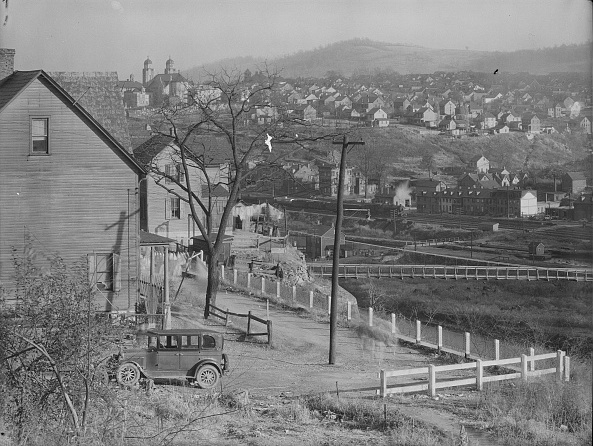
When analyzing Hezekiah Carter’s records in June 2011, I knew the family constellation reflected deep trauma and shifting loyalties. Revisiting the files today, I see that his story is not just a relic of North Harlowe’s past; it reflects the intricate threads that bind family groups together even now.
Hezekiah Carter‘s Family Life
I began by building a timeline of events in Hezekiah’s life from 1847 to 1922, noting births, marriages, and deaths, including the still birth of his youngest son, the birth of a “sickly” baby girl who survived eighteen days, and the death of his father, Isaac Carter—a Civil War pensioner—who died of “old age” in October 1918. This came in the final weeks of World War I, during the deadliest month of the Spanish Flu pandemic.
Even before these tragedies unfolded, a major shift within the family left a lasting mark on two young men. A bitter divide emerged, pitting Hezekiah’s eldest son from his first marriage against his youngest son from his second. Fueled by deep, long-standing resentment, Bert appeared intent on making his younger brother’s life miserable.
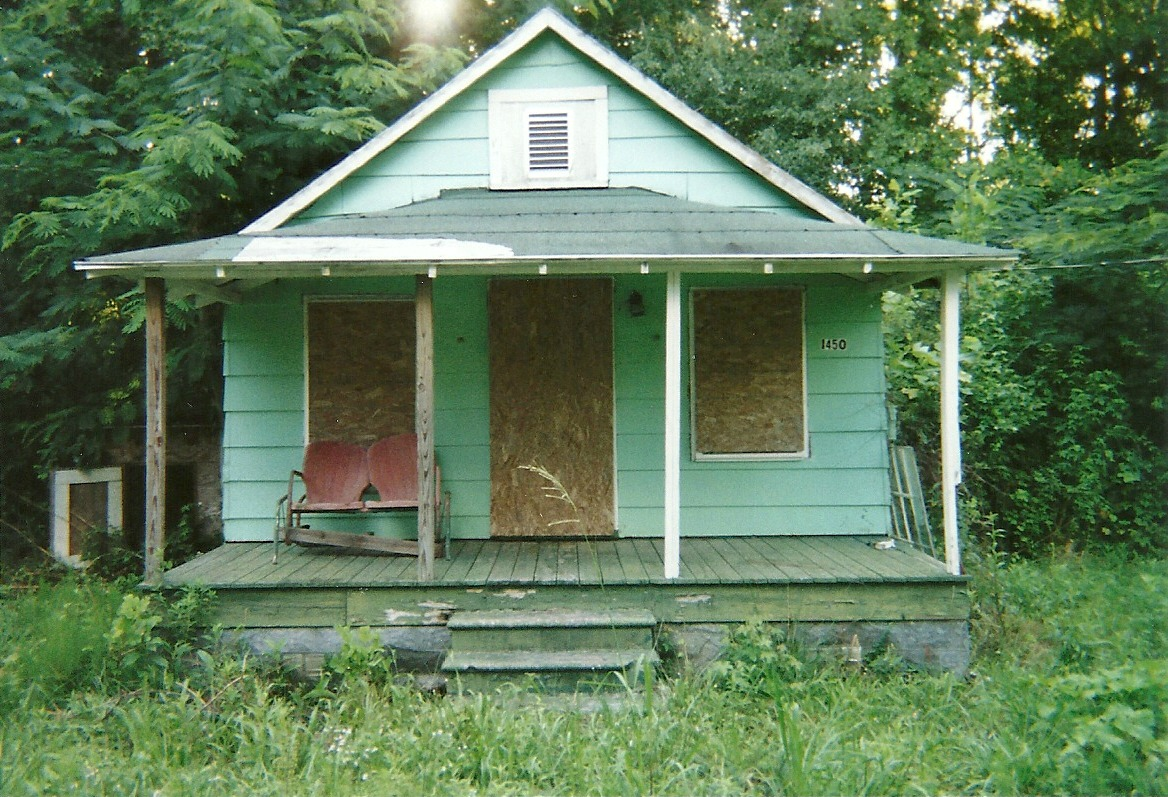
The family’s fortune shattered completely in 1920 when their two-story home and store burned to the ground. The insurance company suspected foul play, possibly insurance fraud, and refused to pay the full claim. Instead of rebuilding, the family put up a cramped shotgun house across the street. Within those narrow walls, the family dynamic was forever altered. Among the six children—five boys and one girl, with the lone daughter marking the end of the first marriage—the growing bitterness became unbearable. Gradually, each child moved away, leaving behind a scarred legacy and a homeplace that today stands as a decaying shell in the hands of an outsider.
In the middle of those transitional years, the family’s deep internal turmoil took an even darker turn. By 1926, the simmering resentment inside the cramped shotgun house erupted into a fresh scandal. My husband’s cousin recounted the vivid legend exactly as it has been whispered down through the generations.
Hezekiah somehow found out about John Carter coming to his home. Hannah would lean out the side window and flirt with him. The roads were packed dirt, and there were foot paths and cart paths through the forest. Hezekiah happened to be home that day when John came strolling by. He told his wife to call John to the window, which she did and Hezekiah shot him. They say John left a blood trail from that window, on the cart path, all the way home, where he died. I think he bled to death.
For a hundred years, this tale—shrouded in gossip and missing details—has been passed down from one generation to the next. When I finally reached past the legend and into the archival records of the 1926 shooting, I found that the truth was far more complex than a simple act of jealousy.
Examining the Legend
This is how the facts emerged. On the North Carolina coastal plain and in the Croatan forest region, many farmers ignored the “closed range” mandate. They released their pigs into the forest to forage on mast—acorns, beechnuts, and forest-floor vegetation—to avoid the cost of expensive feed. When it was time for market or slaughter, rounding them up meant that families and neighbors used dogs to drive the livestock out of the dense pocosin wetlands.
In mid-August 1926, after a number of Hezekiah Carter’s neighbors had helped gather the hogs, it was generally known that he had a sizeable sum of money in the house. The $175 in cash represented a substantial portion of the family’s resources for the year, meant to cover the year’s taxes, settle accounts at the local general store, and purchase supplies for the coming winter.
That night, as he lay in bed, someone came to the open window and attempted to break in. He fired a load of shot through the screen wire over the window, causing the unidentified intruder to retreat into the darkness. Afraid to venture forth, Hezekiah waited until morning to inspect his property, where he discovered a trail of blood leading from the window to a cart path through the woods.
The following Friday, Sheriff Lane arrested Hezekiah for the murder of John Henry Carter and brought him to New Bern for questioning, because the trail of blood led directly to his house on the west side of King’s Creek. John Henry was rushed to St. Luke’s Hospital in New Bern, where, in a basement room between the hospital kitchen and the janitor’s supply closet—the ward where Negro patients were treated—a physician amputated John’s arm in a feverish attempt to save him from blood poisoning. The effort failed, and John Henry succumbed to the toxic effects on Thursday. The coroner declared his death a homicide, resulting from a gunshot wound to the arm.
That same day, Hezekiah’s sister-in-law, Josephine (Dove) Carter, served as the informant on the death certificate. His brother William Henry’s family lived next door, but their two-story house stood further back into the woods. Perhaps Josephine had heard the shot echoing through the woods late that night, long after the family had settled in from the day’s events. She recorded John Henry’s parents as James Fenner and Nancy Carter, leaving a genealogical puzzle that would take years to unravel.
The next day the sheriff arrested Hezekiah and brought him to New Bern for questioning.
The public narrative, however, quickly gathered its own momentum. The Sun Journal scooped the story on Friday, rushing out reports of Sunday’s shooting alongside the recent, undated assault of John Henry. The double tragedy ran on page one under the headline, “2 Negroes Die as the Result of Gun Wounds.” Two local newspapers tracked the story over a three-day period, but the Sun Journal chose to lean heavily into neighborhood intrigue when they published a provocative rumor: “that the wife of the man who did the killing sent for Henry Carter to come to her house. After his arrival there the shooting occurred, but the circumstances leading up to the act have not been announced.”
This front-page exposure became the narrative that Harlowe’s residents seized upon to build an age-old legend.
By Saturday, the paper thrust the Harlowe tragedy back onto the front page, capturing the immediate attention of everyone who picked up the newspaper by leading with the sensational angle that:
Hezekiah Carter, reportedly a well to do negro farmer of Harlowe, was arrested yesterday afternoon by Sheriff R.B. Lane for the shooting of Henry Carter last week, the wounds resulting in death Thursday. He was brought to New Bern by the county officer and released, the sheriff stating this morning that his investigation indicating that the shooting was justified in every respect. The coroner, however, has the prerogative of an investigation of the case and the ordering of his arrest should he deem such advisable.
The article revealed the results of the sheriff’s investigation, including Hezekiah’s testimony of the circumstances around the shooting.
In contrast, The New Bernian did not run its first story on the murders until Saturday, choosing to stick strictly to the sheriff’s official, bare-bones facts. They reported simply,“No details have been learned about the Carter murder… both hearings have been postponed until the witnesses can be summoned. The bodies have been viewed and juries empaneled.” A special hearing would ultimately be required, where a coroner’s jury of six to twelve citizens would listen to the evidence to determine if a true crime had been committed.
Reconstructing the Carter Lineage
When these posts were first released, the most-asked question was whether I had determined the relationship between Hezekiah Carter and John Henry Carter. As I eventually discovered, the confusion on the death certificate stemmed from the fact that John Henry was raised by a member of his extended family rather than his biological parents. For years, my primary blind spot was relying too heavily on official documentation and not enough on the oral history of descendants firmly rooted in the community.
That changed through a dialogue with one particular cousin. Years earlier, his father had called me out of the blue, wanting to verify if I actually knew the family history or if I was simply passing along the same incorrect assumptions as so many others—either from neighborhood rumors shaped by newspaper reports or from genealogical claims made without access to firsthand knowledge. He wanted to know about my research methods and standards—whether I made family connections based on what “looked good,” or on what could be substantiated by those who had lived within those family groups. Once I proved myself, that phone call opened the door to a collaboration with his son, who encouraged me to broaden my search beyond the standard vital records to include the nuanced, often unrecorded relationships within collateral branches.
One of the most important details on a death certificate is the identity of the informant, their relationship to the decedent, and how connected they were with extended branches of the family. Josephine Dove and John Henry Carter were second cousins twice removed; their common ancestor was Revolutionary War patriot William Dove (SAR P#147177, DAR #A216237). In a community where families had coexisted for five generations, the assumption that second cousins twice removed would know who each other’s parents is extremely strong. But this knowledge does not rely on a paper trail. Instead, it relies on a web of social realities, and in this case, the connections were not recorded accurately.
John Henry Carter was lost in my Carter-George family tree. I decided to search for connections through census records. He was born in 1889, but I was unable to locate him within a traditional family group. The first record I found was the 1900 U.S. Census for Fifth Township, Craven County, North Carolina, where he appeared in the household of Barbara Dove (57), a widow raising four nephews—Sylvester (18), Rufus (17), Leavy (10), John H. (11)—and one niece, Olivia (7). This was followed by the 1910 census, in which only John (19) and Olivia K. (18) remained in Barbara Dove’s household.
Barbara Dove was already in my database as a daughter of William Sylvester Carter and Nancy Moore. Seeing her in this context, I began to wonder whether this might explain the appearance of the name Nancy Carter on the death certificate. As I reviewed their children, I realized I had not extended this line to include the grandchildren of William and Nancy Carter.
They had eight children, including Barbara Carter, who married Jacob Dove, the son of Arnette Dove and Martha “Patsey” Johnson. Her brothers William Henry Carter and Martin Carter Sr. were both married and had children. At that point, I decided to confirm my findings with my husband’s cousin, as Martin was his second great-grandfather.
He advised me to look at the children of William Henry and Harriet Carter. Lacking any wills to confirm these relationships, I shifted my focus to land records. Three deeds show that Barbara and William Henry lived next door to each other. With that in mind, it makes sense that when their parents died before 1900, their aunt Barbara took them in.
With this family now in my database, I used a relationship calculator tool to determine the connection between Hezekiah Carter and John Henry Carter. They were second cousins once removed, sharing Revolutionary War patriot Isaac Carter (SAR P#332370, DAR #A202835) as their common ancestor.
Documenting this relationship finally closes the loop on the generations-old mystery. It brings Hezekiah out of the shadows of rumor and provides the historical context for both men. The man shot outside Hezekiah’s bedroom window was no stranger—he was a cousin. By digging past the lore to find the genealogical truth, we have finally brought the official story to light, even though the remote possibility remains that Hezekiah may have known more than he testified, carrying the whole truth to his grave.