The Architecture of a Life: Mapping Personae Through Historical Layers
Core Philosophy
In 2023, I participated in the 10-Month Manuscript Program: First Draft through the Pioneer Valley Writers’ Workshop. The “Ink Masters,” led by author Kate Senecal, was comprised mainly of speculative fiction authors and became a close-knit virtual community where we studied the writer’s craft, practiced technique, and explored the psychological landscape of the writing life, addressing the internal hurdles of creativity and the discipline required to sustain a long-form project.
It was within this supportive environment that I began to dismantle my own opening chapters. The three-page work sample included with my application opened the dual-timeline novel with the stark contrast between a beautiful New England autumn filled with excursions on the Mohawk Trail and visits to maple sugaring houses for “stacks of pancakes swimming in Grade A Amber maple syrup,” and an unplanned train ride to western Pennsylvania to say their final goodbyes to their dying patriarch. The story, told through the eyes of the eldest daughter, illustrated the impact of anticipated loss upon a five-year-old. Her memory of those first three years was strongly attached to her aging grandfather.
By the time the monthly workshops commenced, I had discovered that the Mohawk Trail was not where the novel should begin. Instead, I shifted to the timeline of German immigrants living in the same town one hundred years in the past.
The point of view moved to another eldest daughter—one who had already faced the most tragic years of her life. As she prepares for the eventual death of her aging husband, she decides to reveal a long-held secret to her youngest sister: the truth of the family constellation shift they experienced when their birth mother passed away.
My colleagues fell in love with the characters and the rich detail of a 19th-century immigrant family in western Massachusetts… but for one thing. My characters lacked interiority.
As mentioned in “The Researcher’s Playbook for Personae Profiles,” a shift in family constellation provides opportunities for interiority. While I had employed this technique to historical narrative as early as 2012, I had failed to recognize how it relates to character development in historical fiction. With renewed purpose and a complete structural overhaul, I shifted the triggering event to an earlier point in the immigrant story and changed the central theme.
During my year working with Ink Masters, I developed a method of worldbuilding through scrapbooking. I had never been a scrapbooker. It always felt too tedious. But that level of detail turned out to be exactly what I needed to stay consistent when writing about a specific historical place and time.
And somewhere in that process, I realized I wasn’t just building the world anymore. I was starting to see the characters differently within it.
The Radiating Journey: From the Core to the World and Back
How the Four Layers Shape a Character
What finally emerged from that process surprised me. I revised the opening twice, but something still didn’t feel right. It took a while to see it clearly: the problem wasn’t the scene, it was where I was starting. The workshop didn’t just push me to revise; it forced me to rethink where the persona actually begins.
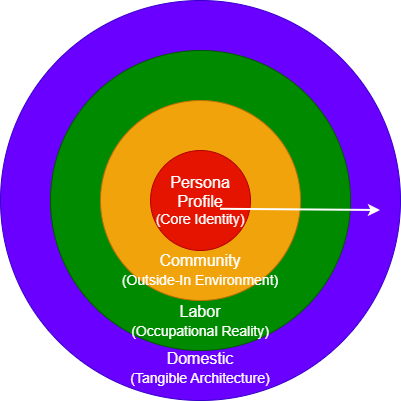
Most character models treat the core as something shaped by pressure from the outside world. That wasn’t what I was seeing. The center isn’t molded from the outside in—it expresses itself from the inside out.
Instead of starting with external forces, I start with the Persona Profile—the version of the self that steps out into the world.
I picture the character leaving their home in the morning, already carrying that persona with them. They open the door and step into the Community, where that internal sense of self meets the social expectations and physical realities of the 19th century.
From there, they move into their Labor. The day begins to press in—demands, obligations, small frictions that test who they believe themselves to be.
And then, at the end of the day, they come back home to the Domestic life.
It’s in that return that something shifts. The space is the same, but they aren’t. They notice things differently. The familiar feels altered, shaped by everything they’ve just carried through the outer world.
The Curator’s List
Each layer of the character is built from evidence. Just as a historian gathers records to understand a life, the writer curates details that give each layer depth and credibility. These sources are not background–they actively shape how the character moves through the world. What follows are starting points for building each layer with intention, using materials grounded in the historical record.
🔴 The Core: Persona Profile
This layer begins with the inward self as it is known, remembered, or presented. To develop it, I look for sources that suggest temperament, identity, family connections, beliefs, and personal continuity across time.
- Census records, which provide a framework for household composition and place in time.
- Letters and correspondence, which reveal voice, relationships, and private concerns.
- Diaries and journals, which can show habits of thought, emotional patterns, and daily priorities.
- Church records, which may indicate membership, community standing, and life events.
- Probate records and wills, which often reflect family ties, possessions, and values.
These sources help me build the character’s internal profile as something historically grounded rather than invented in isolation.
🟠 The Community: The Public Face
This layer shows how the character appears in the world outside the home. I use sources that reveal reputation, social placement, civic presence, and the expectations of the surrounding community.
- Tax lists and land records, which show standing, property, and local presence.
- Court records, which may reveal conflict, obligation, or legal identity.
- Newspaper references, which can capture public activity, announcements, or local reputation.
- Membership rolls and meeting minutes, which point to participation in civic or religious life.
- Town and county records, which help place the character within the structure of daily public life.
- City directories, which bridge public identity, occupation, and residence by showing where the character lived and how they were listed in the life of the town. You can often gather information about family relations within the household and the community. In addition to this, business advertisements provide valuable insight into the world they lived in, where they shopped, goods and services provided, and information about city government.
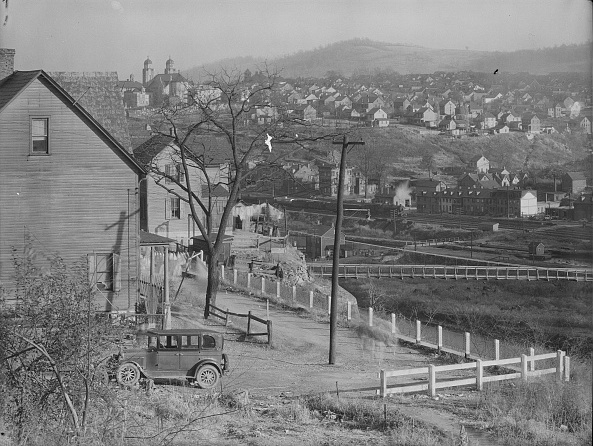
- Local histories provide the context for community life, institutions, and the physical setting of the character’s world. They help explain how neighborhoods, occupations, and social structures developed over time.
- Local history museums and historic sites, which provide context for place, community memory, and material culture.
- Interpretive historians who help translate local evidence into a fuller understanding of daily life, social structure, and historical change.
- Interviews and oral histories about local life and social practice.
- Historical novels with similar settings or subject matter, which help me study how place, labor, and social life can be translated into scene and atmosphere.
These materials help me understand the character as others would have known them, not only as they knew themselves.
🟢 The Labor: The Occupational Reality
This layer focuses on what the character does to survive, contribute, or define themselves through work. I look for sources that show labor as a lived reality, shaped by class, place, skill, and historical circumstances.
- Apprenticeship records, which can show training, trade, and early vocational paths.
- Account books and ledgers, which reveal transactions, exchange, and economic relationships.
- Occupational records, which identify trade, employment, or professional responsibility.
- Military records, when labor includes service, duty, or wartime experience.
- Local business or guild records, where available, which help reconstruct the structure of the work.
- Videos, demonstrations, and interviews about the work itself.
These sources help me ground the character’s daily efforts in the material demands of their historical moment.
🔵 The Domestic: The Tangible Architecture
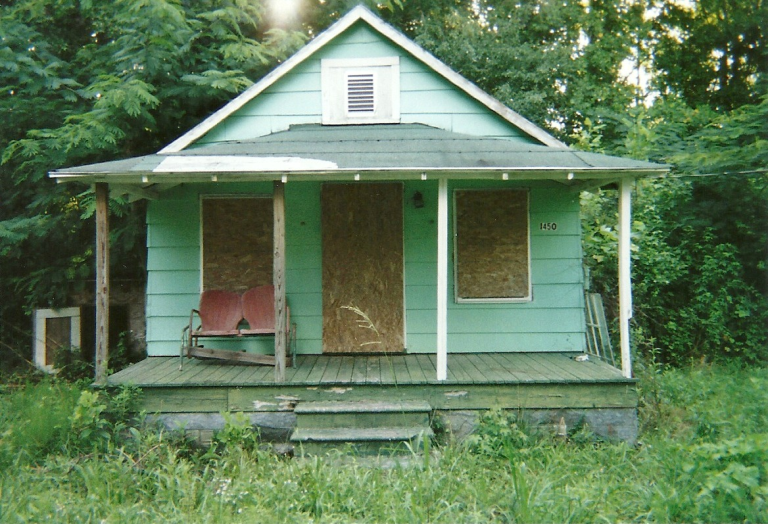
This layer concerns the physical and emotional space of the home. I use sources that help me understand what the domestic world would look like, how it functioned, and what objects or routines shaped life inside it.
- Probate inventories, which can reveal household goods, furnishings, and material conditions.
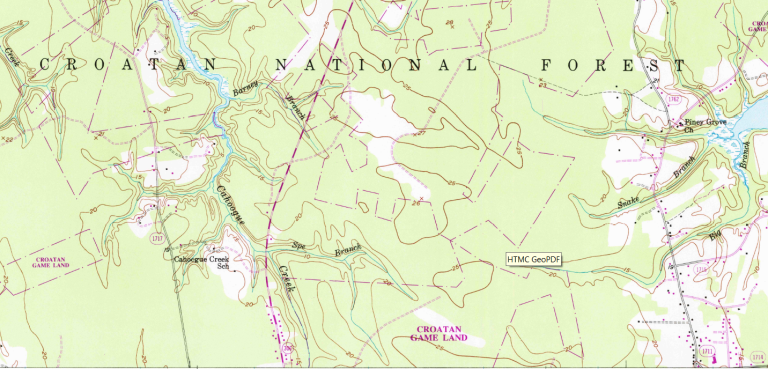
- Architectural records, maps, and plats, which help reconstruct house form and property layout.
- Domestic manuals and household guides, which can show period expectations for home management.
- Archaeological reports and material culture studies, where available, which provide evidence of lived space and objects.
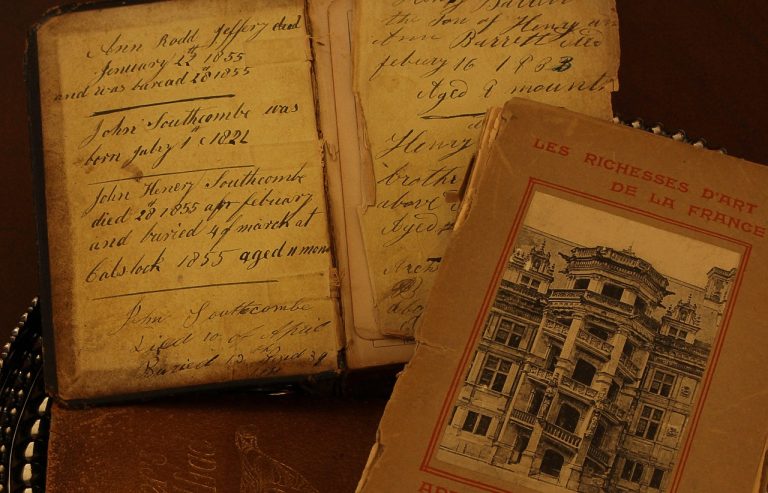
- Family papers and receipts, which may offer small but telling glimpses into household routine.
These sources help me imagine the home not as a backdrop, but as a structure that influences how the character thinks, moves, and remembers.
What interests me most is not just the information each source contains, but the way the sources work together. A character becomes fuller when the private self, the public face, the laboring life, and the domestic world all support one another.
A Final Thought
These sources provide the raw material, but keeping them organized–especially when a timeline shifts or a novel moves away from a specific period–takes a different kind of discipline. In a future post, I’ll show how I use physical scrapbooking to curate these historical layers, so the details that don’t make it onto the page still remain part of the character’s world.